



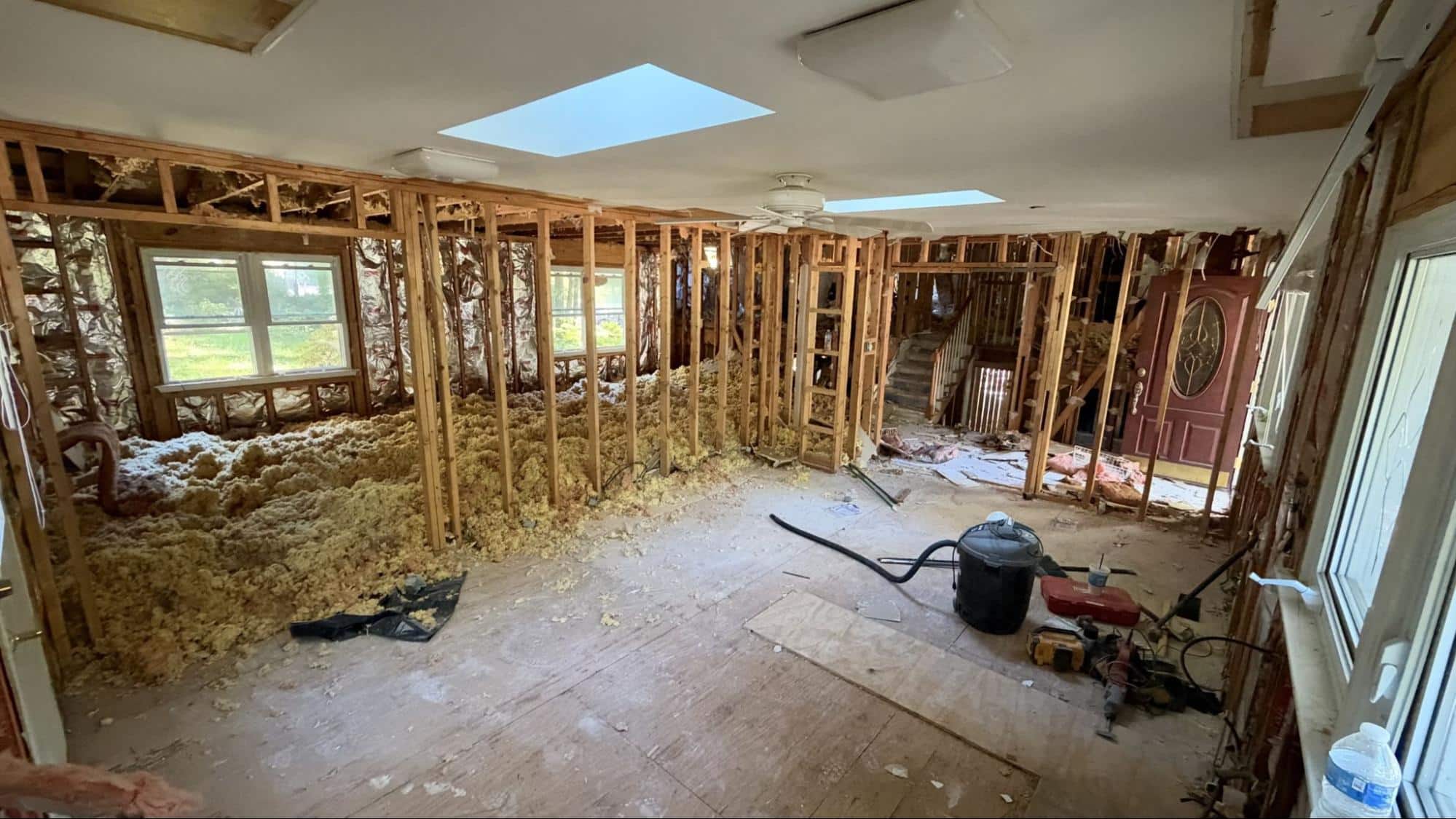
Interior demolition sounds complex but is simply the removal of specific interior parts of a building without affecting its exterior or structure. It involves targeted removal to prepare a space for renovations or build-outs.
For homeowners and contractors, interior demolition is often the first step in a project. Knowing what it involves and when to hire professionals versus DIY can help save time, money, and prevent headaches before the main work begins.
Here are three of the most common interior demolition projects we see across Greensboro, Kernersville, and the Greater Triad Area.
1. Wall Demolition
Wall removal is a popular interior demolition job among homeowners and contractors, as older homes often feature compartmentalized layouts that modern design seeks to transform into open, connected living spaces. The process requires careful assessment to determine which walls can be removed safely. Non-load bearing walls can be taken out without structural risks, but load-bearing walls need a proper header beam and possibly additional support columns to redistribute weight. Ignoring these requirements can lead to costly renovation mistakes.
Wall demolition also involves managing utilities hidden within the walls, such as electrical wiring, plumbing pipes, HVAC ducts, and insulation. A single wall can generate a significant amount of debris, including drywall, lumber, insulation, and dust. Having a debris removal plan in place before you start demolition helps keep the site organized and keeps the renovation on schedule.
2. Floor Demolition
Floor demolition is a common interior project in renovations, often involving the removal of old tile, hardwood, laminate, vinyl, and carpet before new flooring can be installed. The process can be more complex than anticipated. Tile and stone flooring removal is particularly demanding because of the heavy materials, stubborn adhesives, and the need to address the concrete board or subfloor underneath. A full tile removal in areas like kitchens or bathrooms generates a significant amount of heavy debris that must be disposed of properly. In contrast, hardwood and laminate floors are generally easier to pull up, but the volume of material can accumulate quickly, especially in larger spaces. Carpet removal may seem straightforward, but it still requires tackling the carpet padding, tack strips, and the carpet itself, all of which need appropriate disposal.
Homeowners are often surprised by what they find beneath old flooring during demolition. Common discoveries include moisture damage, uneven subfloors, and remnants of old adhesives that need attention before laying new flooring. Knowing these potential issues ahead of time helps with planning and prevents unexpected setbacks during the renovation. Knowing what to expect makes the floor demolition process smoother and more manageable, ultimately leading to a successful flooring installation.
3. Ceiling Demolition
Ceiling demolition is often necessary in two primary scenarios: removing a drop ceiling to reveal the original ceiling height or taking down damaged drywall ceilings to address structural issues, water damage, or facilitate the installation of new electrical and HVAC lines. Drop ceilings, commonly found in older commercial spaces and finished basements, involve dismantling the grid system and ceiling tiles. While manageable, this process generates significant debris that must be cleared before the space can be used effectively.
In contrast, drywall ceiling demolition is more complex and physically demanding, as it involves working overhead with debris falling into the work area and dust spreading rapidly throughout the space. Before starting this type of project, establishing proper containment and a clear debris-removal plan is crucial. The process can also uncover hidden surprises, such as old wiring, plumbing, or insulation that needs careful handling. Therefore, having an experienced crew that knows what to look for before starting is vital to completing the job safely and efficiently.
When To Call a Professional
Straightforward interior demolition like pulling up carpet or removing a small non-load-bearing partition wall is something experienced DIYers can often handle. Once the scope grows to include load-bearing walls, utility relocation, overhead work, or any structural uncertainty, hiring a professional crew is the smarter and safer choice.
The cost of getting interior demolition wrong almost always exceeds the cost of hiring it out correctly from the start.
If you are planning an interior demolition project in Greensboro, Kernersville, or anywhere in the Greater Triad Area and need debris removal or a dumpster rental to support the work, contact TCC Junk Removal today by calling (336) 916-9169 or booking your appointment online. We’ll handle the cleanup so your renovation can move forward without delays.